Feeling a bit jittery prior to your first driving lesson is to be anticipated. Every driver on the road today has actually been where you are right now. They all made it through that first lesson, and beyond– and so will you!
Why am I so anxious?
If you’re feeling distressed, do not stress, it’s totally natural. What you’re feeling is the worry of the unforeseen. It’s the reason that any brand-new situation makes us anxious.
Let’s eradicate the nerves by preparing you for what to expect from your first lesson. Your mind has something concrete to focus on when you know what’s coming up.
What to expect from my first driving lesson?
The pickup
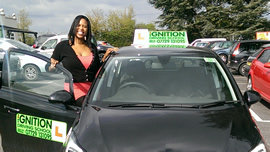
Your driving trainer will have arranged a pickup area with you– probably your house, or outside your school, college or work. You do not need to get behind the wheel simply! Your instructor will pick you up and drive you to a peaceful street devoid of traffic– the ideal place for you to learn more about the basics.
The cockpit drill
OK. Now it’s time to switch so you’re in the driver’s seat. While parked, your trainer will talk you through the DSSSM cockpit drill– how every vehicle driver should start their journey:
Doors safely closed?
Seat in a comfortable position?
Steering position established?
Seatbelts on?
Mirrors changed?
Being familiar with the cars and truck
Now your trainer will talk you through the car control’s, including your ABC– accelerator, brake and clutch. You’ll discover how to operate the indications, mirrors, handbrake and the equipment stick.
Getting moving!
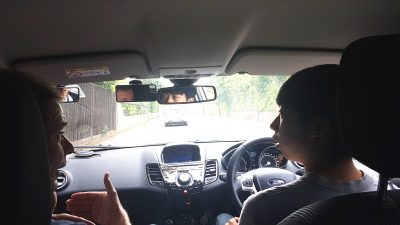
Depending upon the length of your lesson, you should now get the possibility to really drive. This can be a challenging moment but it’s worth keeping in mind that– thanks to the magic of double control automobiles your trainer is every bit as in control of the automobile as you are, so do not fret about making errors.
Before you start, your trainer will talk you through some of the driving fundamentals, which may include:
Moving off– this is an expression you’ll hear a lot. It indicates getting the automobile and equipments all set for driving off from a stationary position
Clutch control– how to find and run the clutch, including finding the bite point
Signalling
When to alter gear, how and
How to stop the automobile– manner ins which you can utilize the brake, handbrake and clutch to stop and slow
Basic parking– suggestions for how to park at the kerb
You’ll generally just drive an extremely short distance, and along a straight roadway, simply to get you accustomed to the feel of the vehicle and the basic controls.
End of lesson
And that’s it. Your trainer will then drive you back to your drop off point and you can have a chat about how the lesson went, and what you’ll cover in the next lesson
If you’re happy with your trainer you may wish to speak to them about making a block booking as this can work out less expensive than booking individual lessons.
Practical prep suggestions for your first driving lesson.
When should you schedule?– whether you’re an early bird or a night owl, select the time of day when you feel best
2-hour lessons– it’s a great idea to book a longer 2-hour lesson at. This gives you time to get gotten, driven to your lesson location, go through the fundamentals and have a shot at driving
Sleep– try to get a good night’s sleep in advance and do not consume the night prior to
Provisional licence– make certain you’ve got this with you for your very first lesson so your trainer can see it
What to wear– stick to flat shoes with thin or versatile soles so you can feel the cars and truck respond much better to what you’re doing. Comfy clothes will help you relax and manoeuvre more quickly
Speak with others– have a chat with friends and family who drive or head to a newbie driver online forum to pick up tips and stories from those who have actually existed previously
Ask questions– do not hesitate to ask your instructor plenty of concerns. Do not worry if you believe your concerns silly, trust us, instructors have actually heard them all before. They’re there to help, and having your concerns responded to will immediately improve your confidence
Feeling a bit tense prior to your very first driving lesson is to be anticipated. They all made it through that first lesson, and beyond– and so will you!
Your driving trainer will have arranged a pickup location with you– most likely your house, or outdoors your college, school or work. Your instructor will choose you up and drive you to a peaceful street totally free from traffic– the ideal location for you to get to understand the fundamentals.
While parked, your trainer will talk you through the DSSSM cockpit drill– how every vehicle driver needs to start their journey:
It’s just natural to wish to pass your driving test as soon as possible, after all, driving includes a lot liberty to your life. Driving is also a skill that brings an enormous amount of value to your life, but there are things you ought to think about prior to you start finding out to drive.
Knowing To Drive & The Legal Requirements
In order to learn to drive, there are legal requirements you should abide by, consisting of:
Hold a valid provisional driving licence, you can obtain one at gov.uk here.
You can only drive a vehicle when you are 17 years of age, however, you can request your provisionary licence from the age of 15 years and 9 months.
Need to have the ability to check out a number plate from 20 metres away.
If you are discovering to drive with a pal or relative, by law they should be a qualified driver with a minimum of 3 years on a complete automobile driving licence, whilst being over the age of 21.
That being said, the vehicle you learn in need to likewise be insured, taxed, have a valid MOT and display screen L plates on the front and rear.
If you like the concept of learning to drive with a friend/family member, or wish to discover in your own vehicle, you can get a competitive Learner Driver quote here, with our acclaimed insurance.
When it pertains to driving lessons you must just pay for lessons if the person is either:
An approved driving trainer (ADI), or
A student driving instructor
, if you’re not sure about a trainers credentials ask to see their Driver and Lorry Standards Firm (DVSA) badge.. A pink badge indicates they’re a student if the badge is green it suggests they are an approved driving trainer. It is advised to have up to 45 hours of driving lessons, this is something to think about prior to you begin discovering to drive.
You can also look for an authorized driving trainer using our handy Discover a Trainer Tool.
Practicing With Family & Pals
When practicing finding out to drive with household & buddies the legal requirements (above) need to all be followed. Learning to drive in your own time, whether that’s in your own automobile or a family/friends vehicle is a brilliant concept. This will offer you more practice, preparing you for your test. More practice can likewise get you utilized to driving in your own car. That being stated it is unlawful for a learner driver to drive without being guaranteed. It is likewise a legal requirement for the individual supervising you to be over 21 years of age. (some insurer need the manager to be over 25, however here at Collingwood it is 21!).
If you feel you would like to get more practice, why not get a quote Student Driver Quote here.
Is it Learning to Drive Difficult?
When they start their lessons is that driving is not simple, one element individuals quickly realise! it takes lots of time and practice, one lesson at a time you will improve and with a little persistence and persistence you will be on the road in your own automobile.
If the badge is green it implies they are an approved driving instructor, a pink badge implies they’re a student. It is recommended to have up to 45 hours of driving lessons, this is something to consider prior to you begin learning to drive.
When practicing learning to drive with family & buddies the legal requirements (above) need to all be followed. Learning to drive in your own time, whether that’s in your own vehicle or a family/friends automobile is a dazzling concept. More practice can likewise get you utilized to driving in your own cars and truck.
How You Can Get Rid Of Stress And Anxiety In Your Driving Test -Top 10 Tips
Everybody has actually experienced that dreaded sensation of anxiety, whether your stomach sinks into an endless pit, or you’re drowning in a pool of sweat, we’ve all existed. Your practical driving test can typically be among those daunting scenarios that can trigger your stress and anxiety to spike. This post is not just going to offer you with pointers that will help you get rid of stress and anxiety in your driving test, it will also supply you with ideas that will help you overcome stress and anxiety in your everyday life.
Sleep # 1.
There are numerous research studies that prove absence of sleep can result in an increase of stress and anxiety. If you’re a night owl, try going to sleep earlier, get rid of blue light from your bedroom (shut off your TELEVISION and phone), avoid caffeine 8 hours prior to you plan on going to sleep and be active throughout the day. Sleep is proven to limit the levels of anxiety, and the last thing you would want to be in your driving test is tired. Do yourself a favour and get an excellent night’s sleep to help you get rid of the stress and anxiety in your driving test.
Caffeine # 2.
It’s a cold crisp morning, your driving trainer is set to get here in the next thirty minutes to select you up for your test. Perfect time to get and have a coffee energized right? Incorrect. I know this may confuse some people, nevertheless, caffeine is a common trigger for panic and stress and anxiety attacks. Caffeine is a stimulant and is known to trigger the flight or battle reaction, this isn’t Perfect when you remain in your driving test. You don’t need to quit coffee entirely, just reducing your caffeine consumption caffeine has shown to help enhance the sensation of anxiety.
Exercise # 3.
Exercise is among the best things to do to minimize anxiety and help your mental health. Exercise will not just increase endorphins, making you more delighted and unwinded, however it will help clear your head. I’m not recommending you do an exercise that Dwayne “The Rock” Johnson would be proud of, however just doing some mild exercise like having a 10-minute jog will soothe your nerves and will give you a more positive mindset before entering your test.
Get Up Earlier # 4.
Getting up previously isn’t necessarily going to minimize stress and anxiety, but being late is absolutely going to increase it. On the day of your test, be sure to leave a lot of time prior to you head out. Use that time to relax, clear your head and remember all the great guidance your trainer has actually given you. Because you didn’t leave enough time, there is nothing even worse than rushing.
I understand we all wish to pass the first time, however often the pressure of passing the very first time increases anxiety. The last thing you need to do is add to your concerns, sit back and relax, focus on the test and not on passing the first time. I made this error myself, I was so involved being the very first individual in my household to pass the very first time, that I ended being the individual who stopped working the most times (which is nothing to ashamed about either since it doesn’t matter). 45.7% of young motorists pass their test very first time.
Be Positive # 6.
In some cases your good friends and moms and dads saying “you’ve got this” isn’t rather sufficient. When you’re waiting to take your test, change your thoughts into favorable ones, this will remove the negative self-talk and will make you feel more positive.
Motivation # 7.
Inspiration is a good way to change your state of mind, although it can be hard to get inspired about taking a driving test. All you want is the end result of passing the test. To conquer your stress and anxiety in your driving test, you need to look at why you want to pass your test.
Acknowledge your mistakes and after that overlook them # 8.
You will make small mistakes. Believe of how lots of people pass with no minors if just 47% of individuals pass very first time! If you break a little too hard, take a couple or stall of efforts at a manoeuvre, just acknowledge the mistake, breathe, remain unwinded and keep trying. There is no point in letting one minor, develop into 3 majors due to the fact that you harp on errors.
Do Not Inform Individuals About Your Test # 9.
Conquering the anxiety may be a battle, and not telling all of your pals may appear tough, but in the test you will thank yourself. If you limit the number of individuals who know your test time and date, then you’ll feel less pressured.
Prepare # 10.
The more practice you get, the better you feel. Make sure you practice in the cars and truck that you’re using to take your test. If you can’t afford more driving lessons or you simply want more private practice, you can get guaranteed with https://www.anewdriver.ie.
Your useful driving test can frequently be one of those daunting scenarios that can trigger your stress and anxiety to spike. Sleep is proven to restrict the levels of stress and anxiety, and the last thing you would want to be in your driving test is tired. Do yourself a favour and get an excellent night’s sleep to help you overcome the anxiety in your driving test.
The last thing you require to do is add to your concerns, sit back and unwind, focus on the test and not on passing the first time. To overcome your stress and anxiety in your driving test, you require to look at why you desire to pass your test.
Can You Take Your Driving Test in Your Own Vehicle? You Wager!
The short answer is yes, you can. You can utilize your vehicle for driving lessons, private practice and take your useful driving test. Additional practice in your own vehicle means that you will feel more knowledgeable about the lorry, which may increase your chances of passing.
While many individuals utilize their driving trainer’s car, being able to drive your own automobile or a friend or relative, suggests you’ll feel more positive controlling the automobile, making manoeuvers and the referral points, which all assists to make your dry run less stressful.
What you require to understand about utilizing your own car
In order to utilize your own automobile to take your driving test, there are some things you require to examine. A lot of them might appear obvious, however it’s worth acquainting yourself with what is needed of your automobile to guarantee its test ready.
be guaranteed for a driving test (consult your insurer).
If it’s over 3 years old), be roadworthy and have an existing MOT (.
have no caution lights showing, for instance, the air bag warning light or engine warning light.
have no tire damage and the legal tread depth on each tire– you can’t have a space-saver extra tyre fitted.
be smoke-free– this suggests you can’t smoke in it right before or during the test.
be able to reach a minimum of 62mph and have a mph speedometer (which shouldn’t be a problem for practically every cars and truck on the road).
have 4 wheels and an optimum authorised mass (MAM) of no more than 3,500 kg.
In addition to the above, you need to also ensure you get the best devices and accessories fitted to your car.
The following must be fitted to the car:.
an extra interior rear-view mirror for the examiner.
L-plates (‘ L’ or ‘D’ plates in Wales) on the front and back.
a passenger seatbelt for the examiner and an appropriate passenger head restraint (not a slip-on type).
Can you tape the test?
You can have a dash web cam fitted to your cars and truck (for insurance coverage functions), as long as it records externally and you may not film or record audio inside the car. Lots of dash cams enable you to disable the audio. This is also great to understand, so as soon as you have actually passed your test you do not tape-record accidently record yourself butchering your preferred tune on the radio.
Look for security remembers.
If your cars and truck has been recalled for safety reasons then you will not have the ability to utilize the vehicle for your test unless you have evidence that it’s safe, and you should have this with you when you take your test. Fortunately is that you can check online to see if your automobile has any impressive recalls.
You should bring evidence that says among the following:.
the automobile was remembered and the recall work has been done.
the cars and truck was recalled but didn’t need any work to be done.
the vehicle wasn’t part of the recall.
Getting house.
If you are taking your driving test in your own vehicle and you pass your test, your learner driver policy will end up being void and you will no longer be covered to drive the cars and truck. ‘Congratulations’ will remain in order as you’re no longer a learner driver.
So how do you get the cars and truck house? Have a pal or relative insured to drive the vehicle on standby to drive you home. Alternatively, many insurance policies allow your instructor to have trainer emergency situation cover, which guarantees your trainer or supervisor to drive you directly home after the test. No stopping for Champagne though, they are only covered to drive you straight home.
You can utilize your automobile for driving lessons, personal practice and take your practical driving test. Extra practice in your own automobile implies that you will feel more familiar with the vehicle, which might increase your chances of passing.
You can have a dash webcam fitted to your vehicle (for insurance purposes), as long as it records externally and you might not movie or record audio inside the cars and truck. How do you get the vehicle home? Have a buddy or family member insured to drive the vehicle on standby to drive you house.
Autumn is the time of the year for leaf and pumpkin picking, but it’s also a time when road and weather conditions start getting tougher.
The change in seasons means a change in driving conditions. The temperature is dropping and drivers should prepare for the weather and the autumn road hazards.
A New Driver came across these great top tips for coping with autumn road hazards:
Rush hour sun glare
Sun glare during the day can make it difficult to see pedestrians, street signs, and oncoming traffic. When the sun sets behind a car, it can make it nearly impossible to see traffic lights ahead or out of your rear-view mirror. To help reduce this hazard clean your windscreen. Smeared and dirty windscreens can make the glare of the low sun even more blinding and dangerous. Make sure you clean the inside as well as the outside of the windscreen with proper window cleaner. Wear sunglasses and use your sun-visors too.
Wet leaves
As pretty as the autumn foliage is, it can also be a hazard to road users. Oil and rubber build up from traffic during the summer months can make roads extra slick when wet. Mix in the falling leaves and you’ve got a pretty slippy situation – when leaves get wet, they have even less grip than ice. Wet leaves can often hide other hazards too, like pot holes. If you see a patch of wet leaves, reduce your speed on approach.
Low tyre pressure
The drop in temperature can cause the air pressure in your tyres to also drop. Car tyres must be properly inflated to maximise fuel efficiency, safety and traction. Head to your nearest petrol station and take a tyre pressure reading and if it is low, inflate the tyres to the manufacturer’s recommendations.
Active animals
Autumn can be a dangerous season for animals, drivers and car bonnets as all manner of our furry and feathered friends are getting busy preparing for the winter as well as, eh, just getting busy – October is the start of rutting season when horny deer (sorry) are out looking for a mate. Most animals are active between sunset and midnight, as well as the hours shortly before and after sunrise. This is also when most collisions with animals happen, so be extra vigilant around these times. When you see an animal warning sign, reduce your speed and stay alert. If there is a large animal in the road, dip your headlights – the full beam may cause the animal to freeze and if it doesn’t move, honk your horn. As always though, the most important thing motorists should do is to slow down and leave plenty of space between them and the car in front. This will help avoid most road hazards and allow plenty of time to react.
Drivers who do not exchange their UK licence before the 31st of October 2019, will be forced to take driving lessons and re-sit their theory and driving tests to get an Irish licence. According to Irish Road Safety Authority, CEO Moyagh Murdock, there are plans in place to increase capacity and staff numbers to deal with the expected influx of applications over the coming weeks.
If you live in Ireland and have a UK driving licence, your licence will not be recognised here if there is a no-deal Brexit, so you should apply to convert your UK licence to an Irish licence before Brexit and ensure that you can continue driving legally. Up to 40,000 people who are resident in Ireland but are currently using a UK licence, will be driving illegally if there is a no-deal Brexit on 31 October, the Government has warned. Minister of State for European Affairs Helen McEntee said around 30,000 drivers have already swapped their licences this year, but warned of major consequences for those who do not do so by the end of October.
Irish Road Safety Authority CEO Moyagh Murdock added:
“This will not affect people that are (in Ireland) as a tourist or as a visitor, you will still be able to travel on a UK licence. There are many people who are still driving on a licence they may have acquired from Northern Ireland or in the UK over the years. We want to advise them that after October 31, in the event of a no-deal, it will not be recognised as a valid EU driving licence. Just like other third countries, you will have to go through a very different process and you may find that inconvenient. It could pose problems in terms of insurance and other matters. We have about 250 people a day applying to change from UK and Northern Ireland licences in the event of a hard deal.”
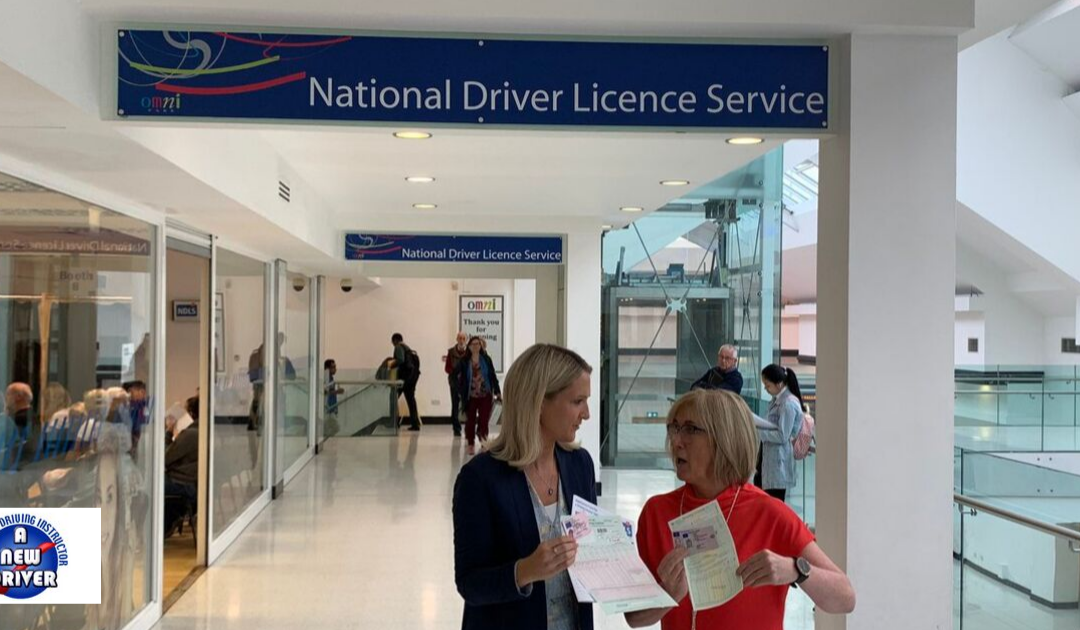
Speaking alongside the junior minister at an event at a National Driver Licence Service (NDLS) office in Santry, Dublin, Ms Murdock warned drivers they could be brought to court if they are found to be driving without a valid licence and there could be implications for their insurance coverage if they are involved in a collision.
Driver testing in Ireland is carried out directly by the RSA, Road Safety Authority. Testing takes place at test centres throughout the country, and in most instances, the test will be arranged for the chosen centre on the application form.
All drivers must take a driving test after they have been issued with two 2-year learner permits. Before you apply for a third or subsequent learner permit for any category of vehicle, you must show evidence that you have applied for, or recently failed, a driving test. You cannot take a driving test for at least six months after getting your first learner permit in the case of motorcycles, cars and work vehicles.
Applying for the test
Waiting times vary from county to county, so it is advisable to apply for a test about six months before the expiry of your second learner permit. The test is standard and all test centres use the same testing procedures.
Possess the knowledge and skill to drive competently in accordance with those rules
Drive with proper regard for the safety and convenience of other road users
Before your driving test, you should study the Rules of the Road. You should also practise driving as much as possible on all types of roads and in all types of traffic situations. This will improve your driving techniques and build your confidence.
On the day of your test, give yourself plenty of time to arrive at the test centre with a few minutes to spare. If your first learner permit was issued after 4 April 2011, you should bring your logbook from your Essential Driver Training (EDT). When your name is called and you are brought into the examination room, your test officially begins.
Technical checks
First you will be asked some questions on the Rules of the Road. Next, if you are doing a driving test for categories B (car), EB (car with trailer) and W (work vehicle), you must explain some technical checks.
The instructor will bring you out to your vehicle and will ask how you would carry out a technical check on three of the following: steering, horn, brakes, tyres, lights, reflectors, indicators, engine oil, coolant, and windscreen washer fluid. To get access to some of these parts, you will have to demonstrate how to open the bonnet and close it securely.
Practical test of skills
Your driving test will take approximately 30 minutes to complete. The examiner will give you clear instructions throughout the test, but if you don’t understand something, ask them to repeat it. Do not panic if you make a mistake during the test. It may not be as serious as you think and it may not mean you have failed.
You will be assessed in the following situations: moving off, driving in traffic, stopping, reversing round a corner, a turn about, a hill start and parking.
The aspects of your driving that will be assessed include:
Road positioning
Overtaking and passing
Anticipation and observation
Use of mirrors and signals
Progress
Speed
Compliance with traffic lights
Road signs and road markings
Proper use of your vehicle controls
You can also expect to make a number of left and right turns, encounter a roundabout and stop at traffic lights. At some point during your test, the examiner will ask you to demonstrate hand signals.
When you return to the test centre, your examiner will bring you back into the examination room to give you the result. If you pass, you will be given a Certificate of Competency, which is valid for two years. Once you have this certificate, you can apply for a full driving licence. If you fail to apply for a full licence during the two-year period, you will have to take your driving test again.
If you fail your driving test, you will be given a detailed list of your mistakes. You should study the list and work on the mistakes before you sit another driving test.
If you are looking to start driving or to apply for a driving test, please contact A New Driver to learn more on how we can help you pass your driving test.
The new scheme for managing diversions on the M50 is to be fully in place in the coming weeks in Ireland. The scheme was first announced in November 2016, and it establishes emergency diversion routes, a process that took more than two years.
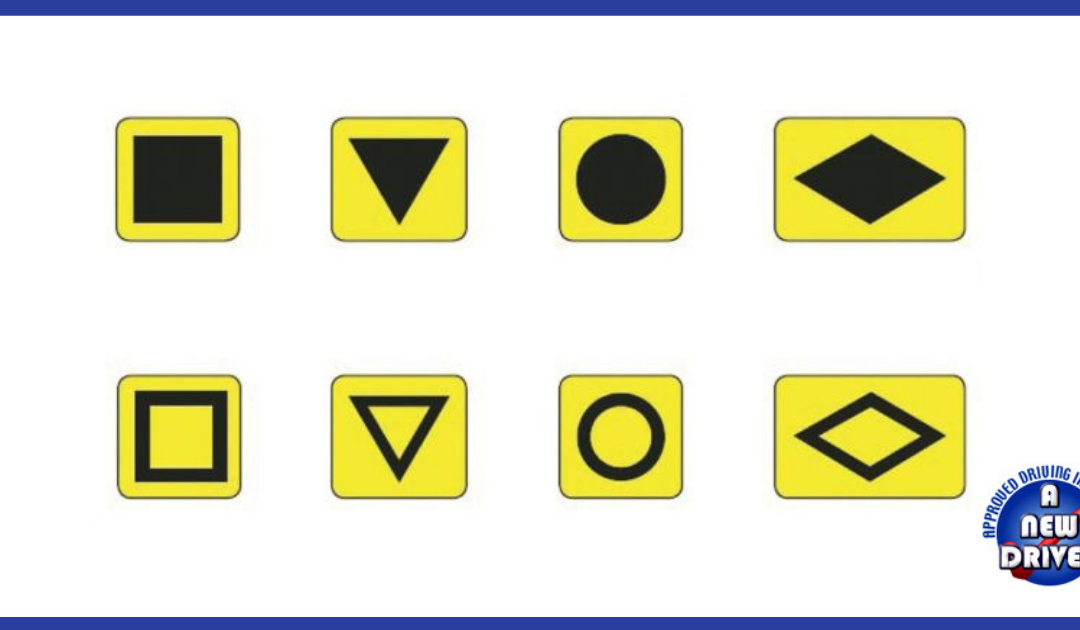
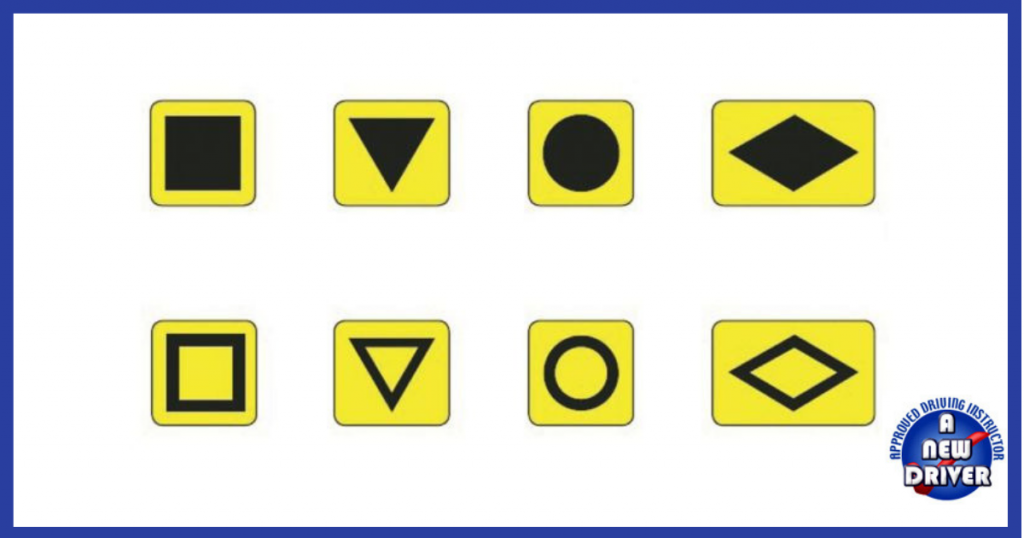
The diversions come into play only when a major incident closes the M50 partially. The traffic will then be diverted from the motorway onto way-marked routes through the suburbs, to the point where motorists can rejoin the M50. The way-marks being used to identify the diversions are a series of black symbols – squares, triangles, circles and diamonds – on yellow backgrounds.
The signage will identify diversions along the M50 and nearby sections of its feeder routes, such as the M1, N2, N3, N4, N7 and M11. Dún Laoghaire Rathdown County Council is the final authority to fit the symbols to its road signs and the process is expected to be completed in coming weeks.
A similar system is being considered for the Cork Ring Road, the M40. In the event of a major incident, motorists will see a message on overhead electric signs advising them that the motorway is closed. The electronic display would tell them which symbol to follow. Gardaí would also be on duty and the motorway operator would also use social media and radio to help inform drivers of what was happening.
New Road Signs in Ireland in Response to Incident
The move is in response to a major disruption caused by serious incidents on the M50 including an incident in 2015 at the N4/M50 junction, which caused traffic gridlock lasting several hours and led to calls for better contingency planning.
Transport Infrastructure developed the diversions after looking at similar systems in the UK and in association with the Interagency Incident Co-ordination Group, which includes representatives of An Garda Síochána, Dublin Fire Brigade, the four Dublin local authorities, and the Motorway Traffic Control Centre.
The system has, as yet, been used only twice. The first time was at the junction of the M50/M1 in 2016 when a major crash closed the junction, and the second was this May when a lorry and a bus collided on the N7, near the M50. In both incidents, traffic had been diverted effectively with the aid of the overhead signs, the new symbols, the Gardaí, radio and social media.
The M50 emergency diversions project should be completed in coming weeks and should be relaunched soon.
Learner drivers have been avoiding to take their driving tests.
Taking your driving test is imperative if you wish to achieve positive results. Avoiding it, it’s only going to lead to delays, frustrations and bad driving habits.
More than 120,000 learner permit holders who obtained their first licence between 1984 and 2016 have never taken a driving test, new figures show.
The Road Safety Authority (RSA) said the 125,860 learner permits issued between 2016 and 1984 remain active, meaning they are being renewed every year.
Under the current rules, a driver can renew their learner permit once they have booked a driving test. They do not need to provide proof of having sat the test and there is no legal requirement for a learner driver to take one.
The issue also partly explains the proportion of drivers who fail to show up for their test, with an RSA spokesman saying about 10 per cent of applicants, up to 500 a week, fail to attend.
The RSA said while longer waits for a driving test were an issue for some drivers between 2016 and last year, the average waiting time nationally now stands at 8.4 weeks, following the hiring of additional testers.
The figures were released by the RSA following a Freedom of Information request from The Irish Times and cover the time period from 1980.
The authority said the recent Clancy Amendment – which introduced penalties for learners who drive unaccompanied – has led to a 30 per cent increase in driving test bookings. It believes the legal change will see the number of long-term learners permit holders gradually fall.
 The pickup
 The pickup
 The cockpit drill
 Being familiar with the cars and truck
 Getting moving!
 End of lesson